Slate Summary
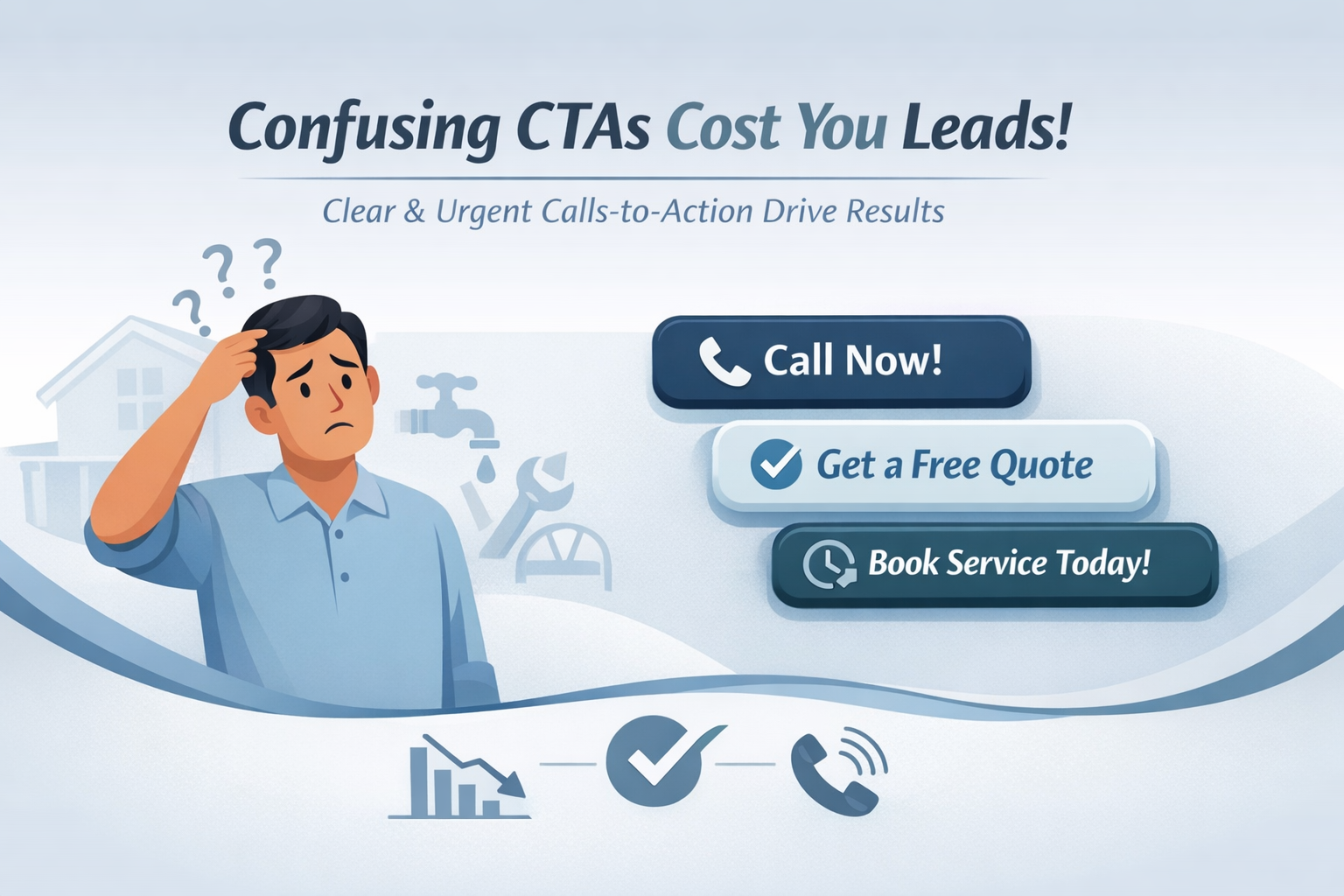
Confusing calls-to-action (CTAs) can lead to lost leads and diminished trust among homeowners. Clear, concise CTAs drive more calls and improve booking rates, so focus on streamlining your messaging and creating urgency.
Introduction
In the world of home services, clarity is key. Homeowners seeking solutions to their HVAC, plumbing, or remodeling needs are often bombarded with information. Yet, amidst the noise, what stands out most are the calls-to-action (CTAs) on your website. If these CTAs are confusing or contradictory, they can lead to lost opportunities and reduced call volume. Today, we’ll dive into why well-structured CTAs matter and how to refine them for maximum effectiveness.
Understanding CTAs and Their Importance
Calls-to-action are the guiding prompts that tell your website visitors what to do next. They can be anything from buttons encouraging users to “Call Now,” “Get a Free Estimate,” or “Learn More.” These simple phrases are crucial because they help direct potential customers through their decision-making process, ultimately leading to more inquiries and booked jobs.
The Problem with Confusing CTAs
When homeowners visit your site, they may encounter multiple CTAs that send mixed signals. This confusion can stem from:
- Overlapping messages: Should they call you or fill out a form?
- Lack of clarity: Is it a free consultation or a quote?
- Too many options: Which service should they inquire about?
These discrepancies can lead to frustration and ultimately result in potential clients leaving your site without making contact. Let’s unpack how this confusion translates into real business impacts.
The Impact of Confusing CTAs on Call Volume
When CTAs don’t align accurately with homeowner expectations:
- Increased bounce rates: Visitors leave your site because they can’t figure out the next step.
- Lower conversion rates: Confusion leads to hesitation, meaning fewer leads.
- Diminished trust: Mixed messages create doubt about your expertise and reliability.
Real-World Example
Imagine a homeowner searching for emergency plumbing services. They land on your site and see:
- “Get a Free Estimate”
- “Call Now for Emergency Services”
- “Learn About Our Services”
If the calls-to-action are not clear, they may hesitate and leave the site altogether, leading to lost revenue.
Best Practices for Effective CTAs
To ensure your CTAs are effective and drive higher call volume, here are some best practices to implement immediately:
1. Be Clear and Direct
Use straightforward language that tells visitors exactly what to do:
- Opt for singular focus: Instead of “Contact Us for a Free Estimate and Learn About Our Services”, try “Call Now for Your Free Estimate”.
2. Create a Sense of Urgency
Encourage immediate action by adding time-sensitive language:
- “Call Today for a Quick Response!”
- “Limited Time Offer: Free Estimate Until Month-End!“
3. Limit Your CTAs
Too many options can overwhelm. Aim for 1 or 2 primary actions:
- If you highlight emergency services, let that be the focal point for initial contact.
4. Use Trust Signals
Integrate testimonials and certifications near CTAs to build confidence:
- Place a customer testimonial just above the “Call Now” button.
Action Steps for Your Website
Follow these actionable steps to streamline your website’s CTAs:
- Audit Your Current CTAs: Are they clear? Do they support your services?
- Simplify Your Language: Focus on one outcome for each CTA.
- Test Different Variations: Use A/B testing to see which CTAs resonate best with your audience.
- Ask for Feedback: Reach out to past customers to evaluate your calls-to-action.
Closing Thoughts
In summary, clear and effective calls-to-action can enhance your website’s performance and ultimately lead to increased call volume and booked jobs. Website optimization is an ongoing endeavor, and regularly evaluating your CTAs is a crucial part of that process. If you’re unsure where to begin, consider a professional audit or cleanup to ensure your website is geared toward generating leads effectively. By prioritizing clarity, trust, and urgency, you can create a website that serves not just as an online presence, but as a powerful tool for business growth.